English
 Español
Over my 12 years consulting for 70+ plastic packaging manufacturers across 18 countries, I’ve seen 60% of equipment underperformance stem from misaligned initial specifications—not poor machine quality. The right multi-layer blown film system doesn’t just check boxes; it cuts material waste, boosts output, and extends your competitive edge. A well-engineered 3-layer complex film blowing machine solves 90% of pain points for mid-to-high-end packaging producers, but only if you select it based on your actual operations, not marketing hype.
Start with Your Exact Production Requirements
Skip the generic "best seller" lists—they rarely align with your unique workflow. Begin by calculating three non-negotiable metrics: daily output target, film dimension range, and primary end-use application.
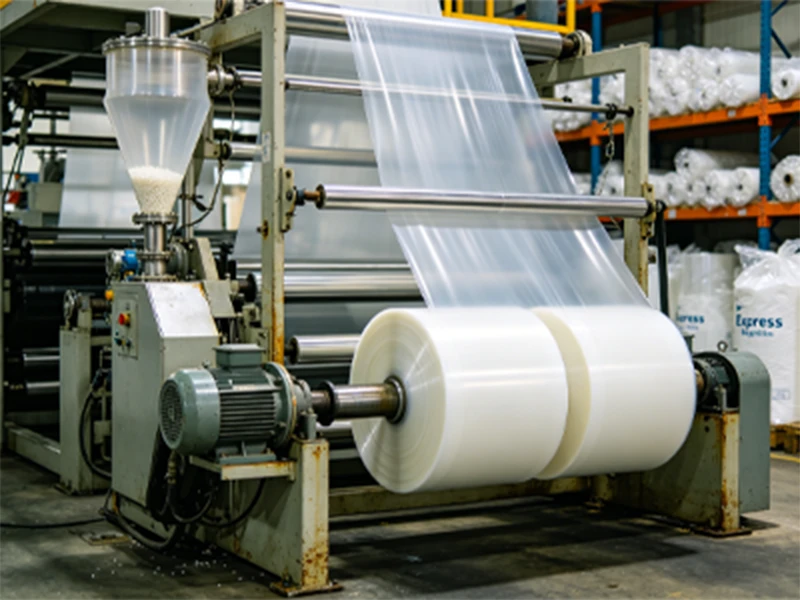
For example, high-transparency heat shrink films demand superior cooling systems to prevent haze, while heavy-duty industrial films require reinforced extruders to handle high-viscosity resins. The Plastics Industry Association’s 2026 Global Packaging Report confirms that food-grade packaging and express bag production are the fastest-growing segments, driving 68% of multi-layer film demand. A Wenzhou-based express bag manufacturer I worked with last year learned this the hard way: they purchased a low-cost double-layer unit that maxed out at 180kg/h, leaving them unable to fulfill 30% of their peak orders. Worse, the film’s poor puncture resistance led to an 8% customer complaint rate.
If you’re unsure how to translate your order volume into machine specifications, explore detailed technical specifications to match your production capacity needs.
Prioritize Energy Efficiency and Operational Stability
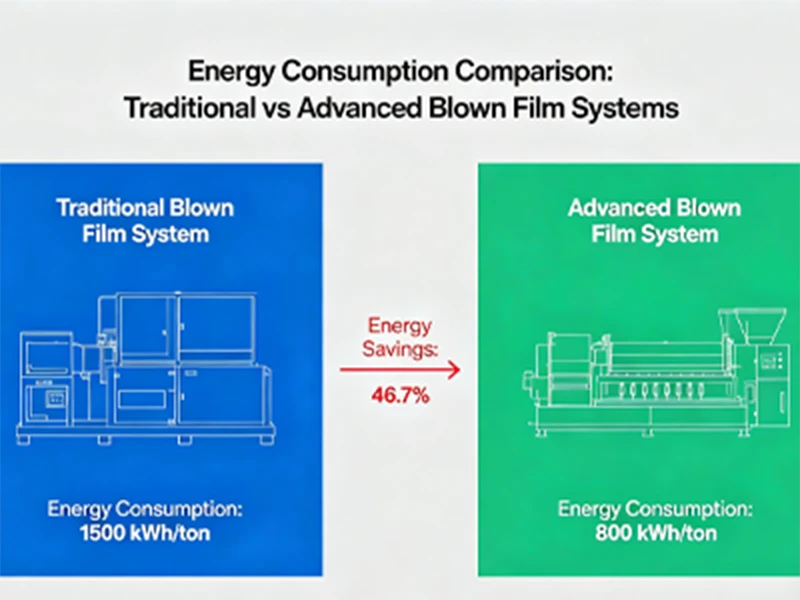
Initial purchase price accounts for just 20% of a machine’s total lifecycle cost. The remaining 80% comes from energy consumption, downtime, and maintenance—areas where budget equipment fails catastrophically.
According to the China Plastics Machinery Industry Association’s 2025 benchmark report, energy costs make up 35% of average packaging production expenses. Advanced systems with IBC inner cooling systems and precision double outlet air rings reduce power usage by up to 30% compared to conventional models, while simultaneously improving film thickness uniformity from ±10% to ±3%. Equally critical is continuous non-stop production capability: double-station filter changers eliminate 2-3 hours of daily downtime associated with manual screen replacements.
SONGSHENG’s systems use Schneider electrical components and Yaskawa/Delta inverters, delivering an average mean time between failures (MTBF) of 8,200 hours—25% higher than the industry average. For a 24/7 operation, this translates to 12 fewer unplanned shutdowns per year.
To learn more about energy-saving technologies and long-term reliability data, get customized configuration quotes tailored to your facility’s power constraints.
Evaluate Post-Sales Support and Customization Options
A machine is only as good as the support behind it. I’ve witnessed factories lose $50,000+ in production waiting weeks for spare parts from overseas suppliers who offered no local service.
Look for providers that offer end-to-end support: on-site installation, operator training, 24/7 technical assistance, and a 12+ month warranty. Customization capability is equally vital—especially if you process PCR recycled materials or specialty resins. Standard screws often struggle with high percentages of post-consumer resin, leading to inconsistent film quality and frequent jams. SONGSHENG modifies screw designs, filtration systems, and control interfaces to handle up to 70% PCR content without sacrificing performance.
For information on after-sales services and material compatibility testing, view real-world application cases from global clients.
Compare Different Film Production Technologies
Before making a final decision, it’s critical to understand how different blown film technologies stack up against your needs:
- Single-layer machines: Lowest upfront cost, but limited to basic packaging applications. They produce films with poor strength, clarity, and barrier properties, making them unsuitable for food or heavy-duty use.
- Double-layer machines: Offer moderate performance improvements, but cannot combine more than two material properties. They struggle to meet modern requirements for puncture resistance and heat seal consistency.
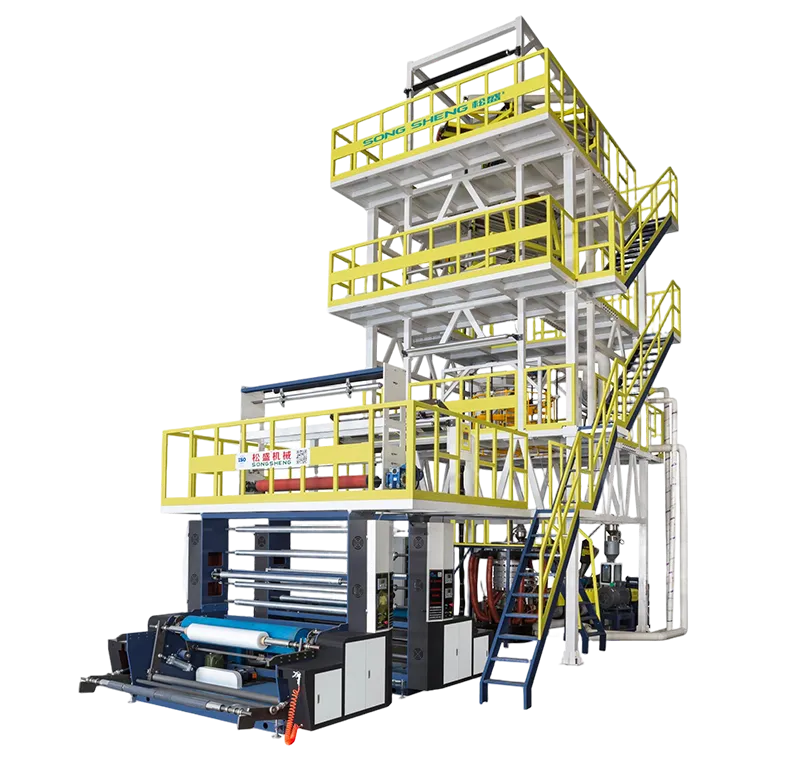
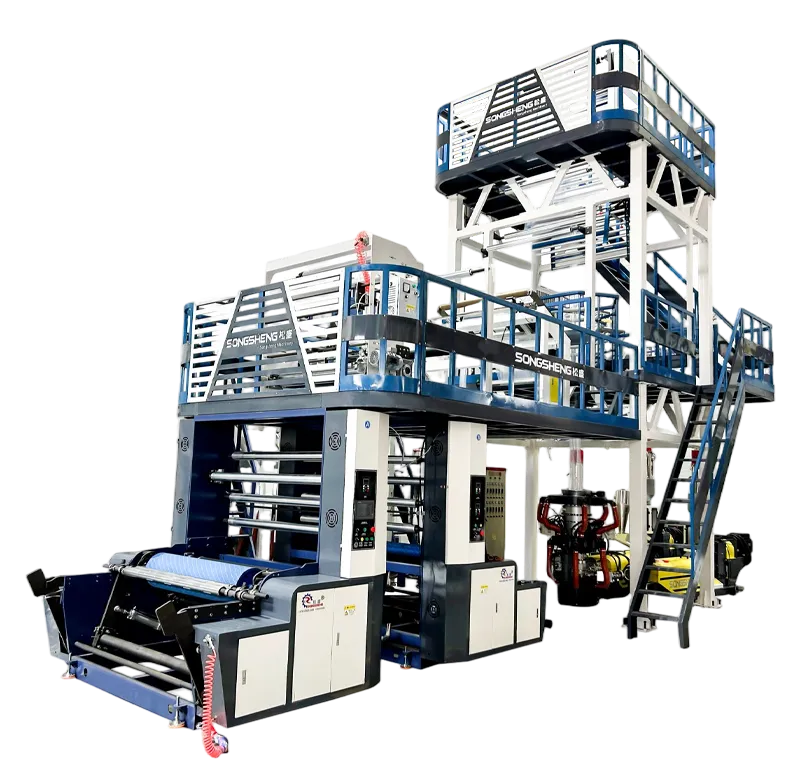
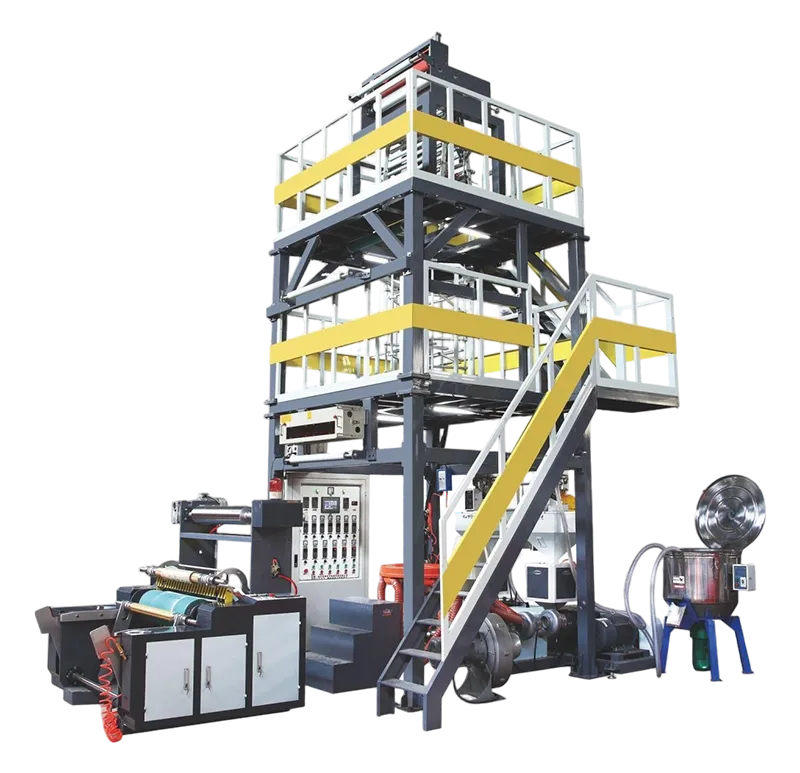
This is where the 3-layer complex film blowing machine truly shines. By co-extruding three distinct material layers, it combines the best properties of each resin: LDPE for superior heat sealing, LLDPE for exceptional tensile strength, and MLLDPE for outstanding clarity and puncture resistance. The result is a film that is 40% stronger and 25% clearer than double-layer alternatives, allowing you to command higher prices in competitive markets. For most mid-sized packaging producers, the investment pays for itself in 18-24 months through reduced material waste and increased product value.
Final Thoughts
Choosing the right blown film equipment is one of the most important decisions you’ll make for your packaging business. By focusing on your specific production requirements, prioritizing energy efficiency and reliability, and evaluating post-sales support, you can avoid the costly mistakes that plague many manufacturers.
If you’re ready to upgrade your production line or expand into new packaging markets, request on-site installation support and a free project assessment from SONGSHENG’s team of industry experts. We’ll work with you to design a solution that fits your budget, your workflow, and your long-term growth goals.