English
 Español
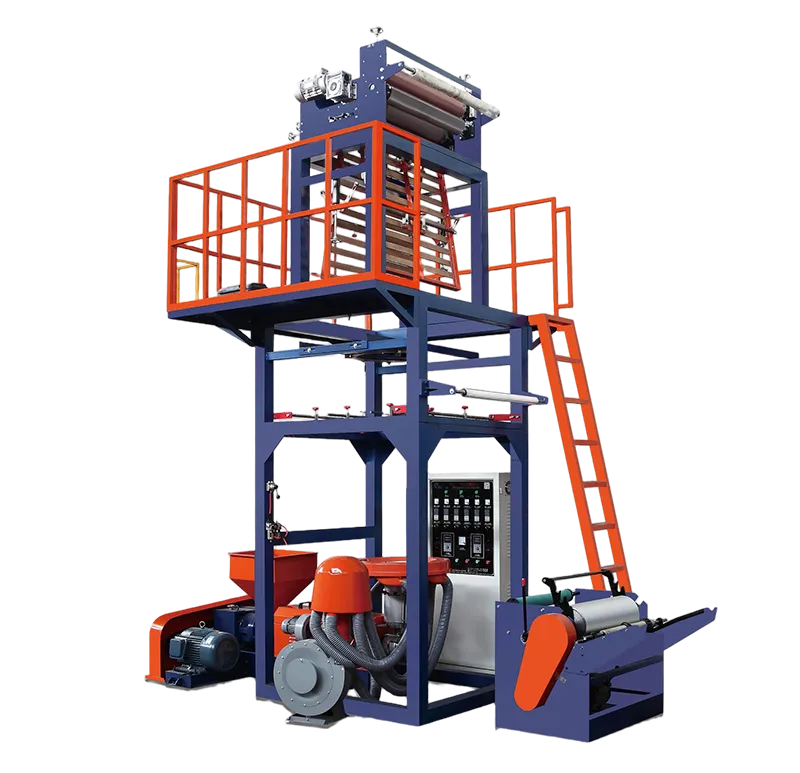
When production managers ask about Film Blowing Machine output, what they're really asking is "How many kilograms of usable film can my line push through reliably, shift after shift, without quality issues eating into my margins?" The published spec sheet numbers—say, 65kg/h on an SJ-65 model—look great on paper. But real-world output tells a different story. You've likely seen it yourself:the theoretical figure drops by 15 to 20 percent once you factor in material changes, cooling limitations, or operator adjustments. So where does that gap come from?And more importantly, how do you close it?Let's walk through what actually drives production on a blown film line.
The Building Blocks of Hourly Throughput
Three core variables determine how much resin moves from hopper to winder:screw geometry, drive power, and material behavior. These aren't independent—tweak one, and the others respond.
Take screw diameter and L/D ratio. A 65mm screw with a 30:1 ratio on standard LDPE might deliver 65kg/h under ideal conditions. But push the same screw with LLDPEor recycled content, and output can drop 10 to 15 percent without warning. Why? Different polymers melt at different rates, and recycled pellets don't feed as consistently as virgin resin.
Die head design also matters more than many realize. Rotary die heads generally handle higher outputs than fixed ones because they distribute melt more evenly across the bubble circumference. That even distribution means fewer thickness irregularities—and fewer reasons to slow the line down for corrections.
Where Bottlenecks Actually Hide
Here's something engineers rarely admit upfront:cooling is usually the real constraint, not the extruder itself.
You can crank the screw speed to push 100kg/h through the die, but if your air ring and IBC system can't freeze the bubble fast enough, you'll get instability, gauge bands, and scrap. One troubleshooting guide notes that adjusting blow-up ratio dimensioning significantly affects bubble stability and subsequent film quality. The same source emphasizes that an inadequately sized die gap paired with an oversized die diameter often leads to melt fracture and a restricted output ceiling.
Then there's the human factor. In my years watching lines run, the difference between a well-trained operator and an inexperienced one can be 15 to 20 percent in effective output. An operator who knows how to read melt temperature fluctuations, adjust air ring flow on the fly, and spot early signs of die build-up keeps the line running consistently. One who doesn't spends half the shift on troubleshooting calls.
Practical Steps to Lift Your Numbers
Let's get specific. What actually works?
Start with temperature profiling. The feeding zone needs to stay cool enough to prevent premature melting, while metering zones run hotter for complete plastication. If you're seeing melt fracture or surging, check whether your temperature settings vary appropriately along the viscosity profile of your specific resin batch.
Screw speed adjustments require finesse. Yes, higher RPM increases output. But push too far and you get poor mixing, higher energy consumption, and film with inconsistent mechanical properties. The sweet spot is where output and quality balance—typically 10 to 15 percent below the machine's maximum rated RPM for most single-screw configurations.
Raw material dryness is non-negotiable. Moisture in LDPE or LLDPE creates bubbles, streaks, and weakened film. That forces line slowdowns or reject rates that quietly kill your effective hourly output. A dehumidifying dryer isn't optional if you're running recycled content or second-quality resin.
Screen pack maintenance pays off fast. A clogged screen pack increases backpressure, reduces output, and accelerates screw and barrel wear. Change it on a schedule based on hours run and material cleanliness—not just when the line starts surging.
A Better Approach When You're Ready to Upgrade
Sometimes you've optimized every variable and still can't hit the throughput your orders demand. At that point, equipment selection becomes the lever.
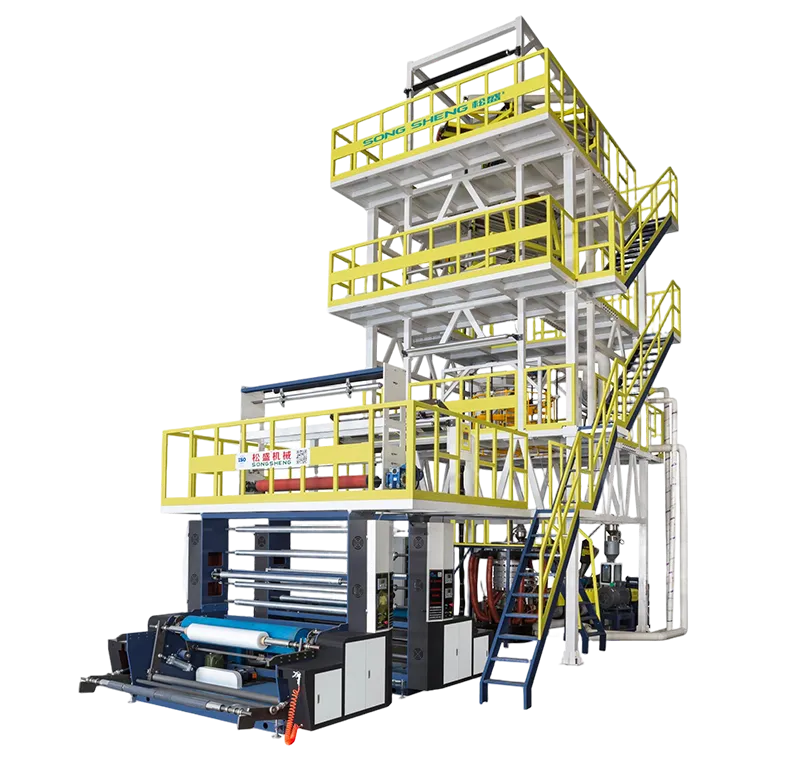
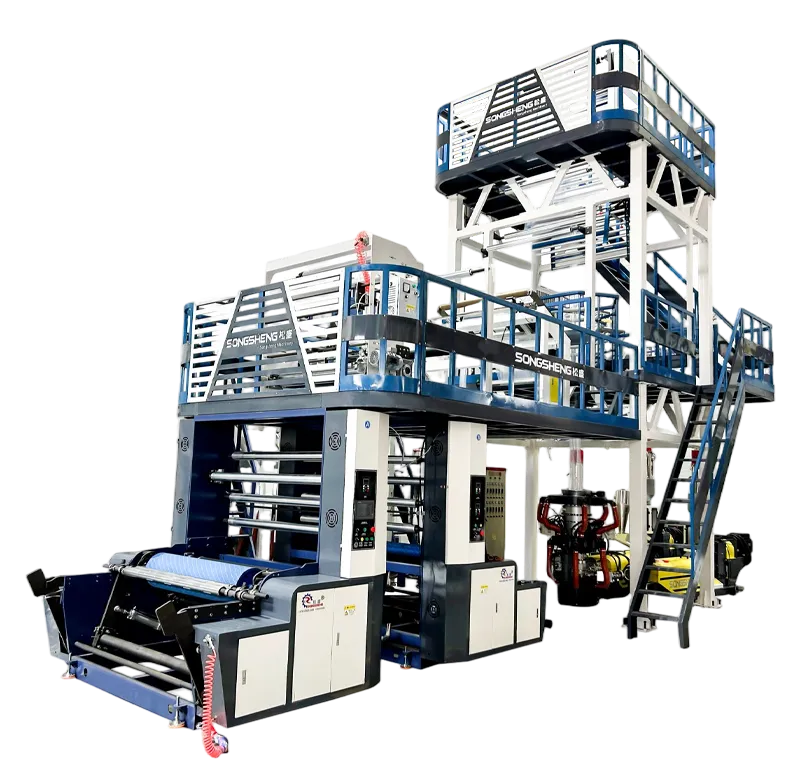
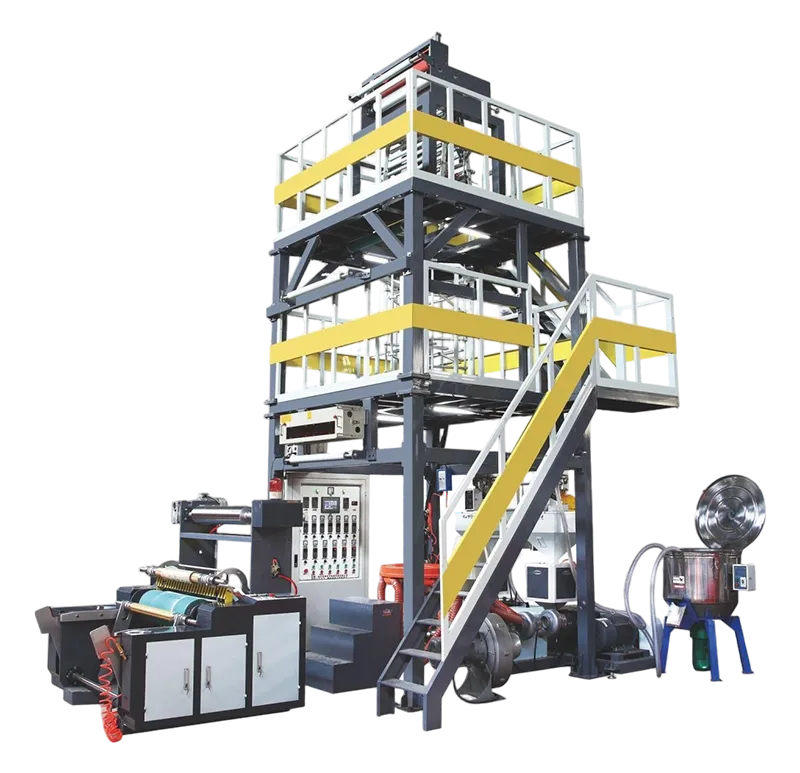
Where do you look? Co-extrusion configurations deserve serious consideration. A three-layer setup might use three 55mm screws to deliver 120kg/h combined, while a single 65mm screw tops out around 70kg/h for the same material. The layer arrangement—ABA versus ABC versus AB with tie layers—directly affects how fast you can run without sacrificing barrier properties.
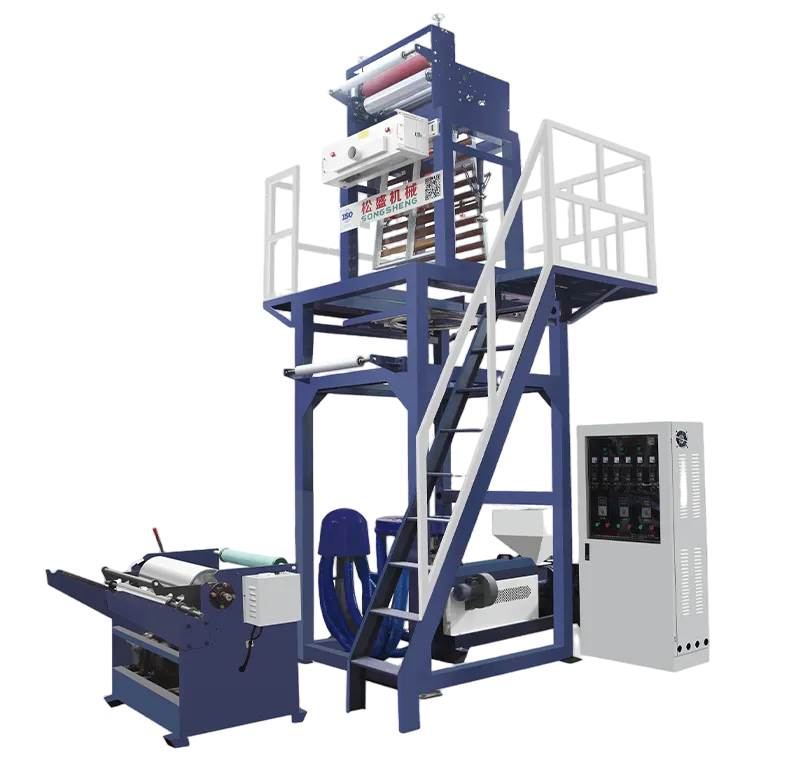
Contrast that with conventional mono-layer machines. They're simpler and carry lower upfront cost, but they typically max out at lower output capacities. When you need high-volume production for commodity films like agricultural sheeting or heavy-duty sacks, co-extrusion lines can double your hourly throughput even though they cost more initially.
Matching Machine to Application
Output numbers only mean something in context. An SJ-65 line pushing 65kg/h for general LDPE packaging film is respectable. But the same machine running biodegradable resin might manage only 80kg/h on a good day. That's not a flaw—it's physics. Different materials have different melt flow index values and require different shear histories.
A 45kg/h rotary die machine for HDPE shopping bags serves a completely different market than a 150kg/h five-layer co-extrusion line for industrial stretch film. Know what film thickness range and layflat width your customers actually need before chasing higher output numbers.
Beyond the Spec Sheet:Customization as a Performance Lever
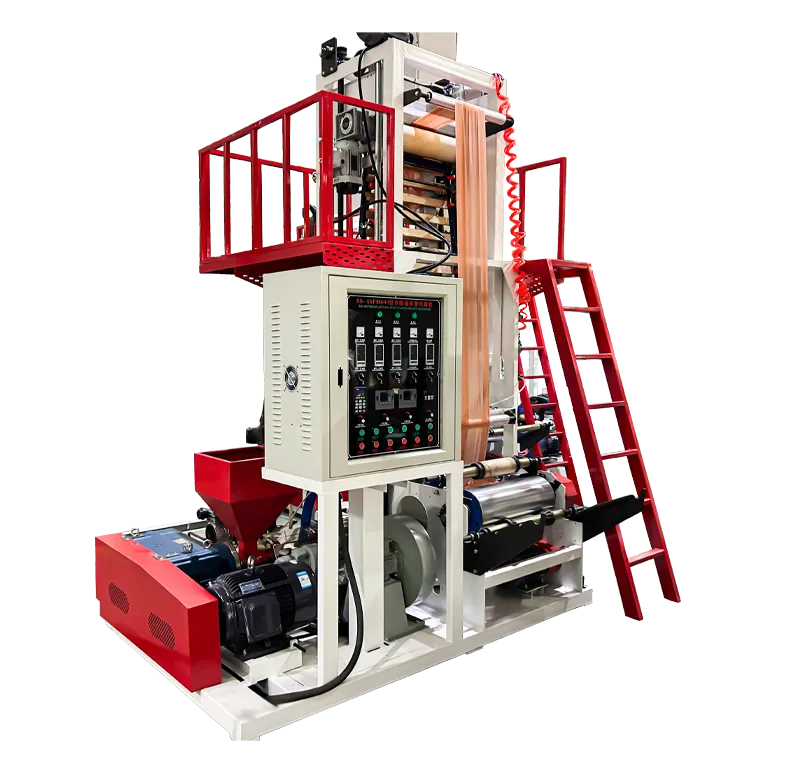
Here's a perspective you won't find in many equipment catalogs. Standard machines solve generic problems. Customized systems solve yours.
I've watched buyers save 30 percent on energy costs simply by having extruder barrel cooling reconfigured for their specific blend of recycled and virgin material. Others have boosted output by 25 percent through die gap optimization tailored to their typical film thickness range.
Why does customization work? Because every production environment has unique constraints: ceiling height for the take-off tower, power availability, floor space for the winder, even ambient temperature affecting bubble cooling.
A good manufacturer asks about these things upfront. They want to know your typical resin blend, your target thickness tolerance, and your acceptable scrap rate. Then they adjust screw design, die geometry, and cooling capacity accordingly. That's not mass production—that's engineering for your specific problem.
The Bottom Line on Output
Understanding Film Blowing Machine output isn't about memorizing spec sheet numbers. It's about knowing which variables you can control and which ones require different equipment entirely.
Most output constraints come down to three things:cooling capacity, operator skill, and material preparation. Fix those before you blame the extruder. A clean, well-maintained line running dry resin with an experienced operator at the controls will almost always outperform a newer machine with any of those pieces missing.
When you do need to upgrade, look beyond the price tag. Consider total cost of ownership—energy consumption, maintenance intervals, and how quickly you can switch between material types. And don't overlook customized machinery that adapts to your specific application rather than forcing your application to adapt to a generic design.
Because at the end of the day, the best output number is the one you can count on, consistently, without unexpected shutdowns or quality surprises eating into your profit margin. That's the real measure of a production line.