English
 Español
What if your next film structure could shed 30% of its weight, double the shelf life of the product inside, and still meet the strictest recyclability guidelines? That sounds like a trade-off from the future, but it’s happening right now on production floors that have embraced multi-layer co-extrusion. For converters who’ve been fighting the battle between downgauging and barrier integrity, the answer isn’t a new polymer—it’s a fresh way of thinking about how layers work together.
A thin stream of EVOH tucked between skins of polyethylene, a micro-layer of tie resin that disappears into the structure, a nylon core that never touches the product: this is the quiet complexity behind today’s most advanced flexible packaging. According to the Smithers report The Future of Flexible Packaging to 2028, the global market for multi-layer films is projected to surpass $240 billion, driven largely by demand for longer shelf life and source-reduced formats. What the statistics don’t show is the underlying equipment shift that makes it all possible. If you’re still running legacy configurations, the gap between your capabilities and the market’s expectations is widening faster than you think. Getting a clear view of advanced multi-layer film production systems is no longer a research project for next year—it’s the competitive baseline right now.
Why stacking layers changes everything
The physics is straightforward but the implications are massive. A single monolithic film always forces a compromise: you pick one resin and live with its limitations. Need oxygen barrier? The whole structure gets expensive and stiff. Want puncture resistance? You sacrifice seal integrity. Multi-layer co-extrusion breaks that compromise by letting each layer do one job well.
A typical high-performance structure today might look like this:
| Function | Layer Position | Typical Material | Thickness Contribution |
| Seal integrity & hot tack | Inner | Metallocene LLDPE | 25–40% |
| Moisture barrier | Core-inner | HDPE or PP | 15–25% |
| Oxygen/aroma barrier | Core | EVOH or PA-MXD6 | 5–10% |
| Structural strength | Core-outer | PA or PET | 10–20% |
| Printability & exterior finish | Outer | LDPE or EVA | 15–25% |
When these functions are combined in a single pass, the resulting film can be 20–40% thinner than a comparable laminate or monolayer structure while delivering measurably better barrier properties. Oxygen transmission rates (OTR) below 0.5 cc/m²·day, measured per ASTM F1927, are now routinely achievable in films under 60 microns—performance that once required foil-based laminates.
This isn’t just a lab curiosity. Major brand owners including Mondelēz and Nestlé have publicly committed to mono-material recyclable structures, and many of their recent packaging overhauls rely on precisely engineered multi-layer PE/EVOH/PE films that can enter the polyethylene recycling stream. The die technology that makes this possible—with individual layer thickness control down to ±2%—is where capital investment decisions get real.
The quiet shift from “more layers” to “smarter layers”
Ten years ago, the industry narrative was about chasing layer count: 5, then 7, then 9, then 11. Today, the conversation has matured. According to AMI Consulting’s 2024 data on blown film extrusion capacity, the fastest-growing segment isn’t extreme layer counts but flexible 5-to-9-layer configurations that can run a wide resin palette and switch quickly between mono-material and multi-material structures.
What’s driving this? Two words: design freedom. Converters who once had to commit to a dedicated barrier line now want to run a PE/EVOH structure on Monday, a low-cost LDPE/LLDPE blend on Tuesday, and a PA-heavy vacuum skin film on Wednesday—all on the same investment. This demands a completely different machine philosophy, one where layer ratios are reconfigurable through software rather than hard tooling changes. When you evaluate flexible co-extrusion platforms with rapid layer reconfiguration, the number of layers becomes less important than how fast you can repurpose them.
Another under-discussed trend is the rise of micro-layer feedback control. Modern gravimetric blending and in-line thickness scanning can now adjust individual extruder outputs within a single bubble revolution, compensating for ambient temperature shifts or resin lot variability. One processor I spoke with reduced their EVOH consumption by 18% simply by tightening the standard deviation of the barrier layer thickness—no reformulation, just better process control. At current EVOH prices, that single change paid for a control system upgrade in eight months.
The equipment foundation nobody wants to talk about
Here’s the part that often gets skipped in glossy whitepapers: a multi-layer structure is only as good as the die that forms it. Low-quality spiral mandrel distribution or uneven melt temperatures at the die lips can turn a brilliant formulation into a film full of gels, gauge bands, and barrier defects that only show up when a customer’s QC lab tests the OTR.
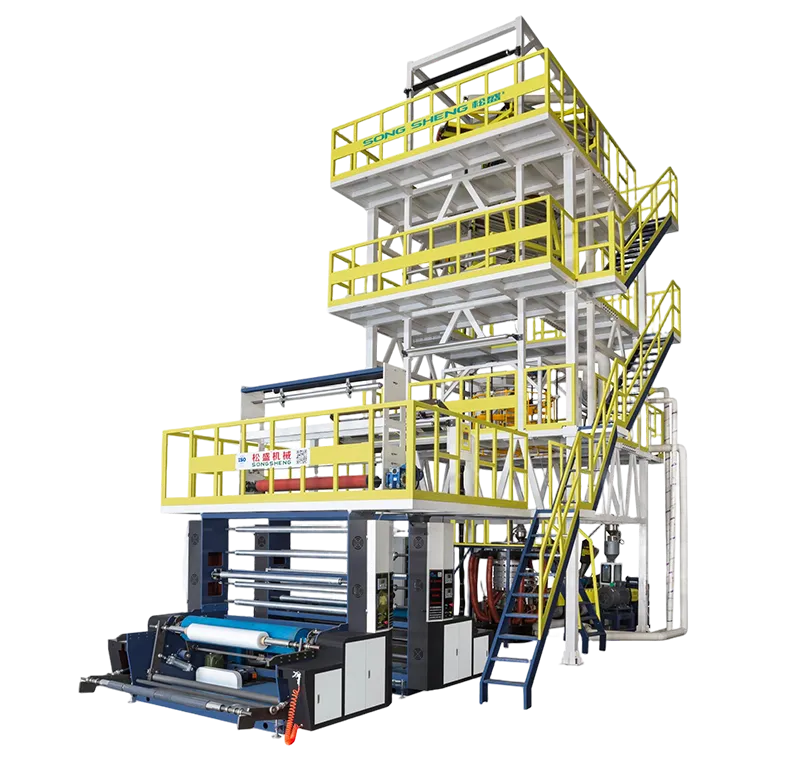
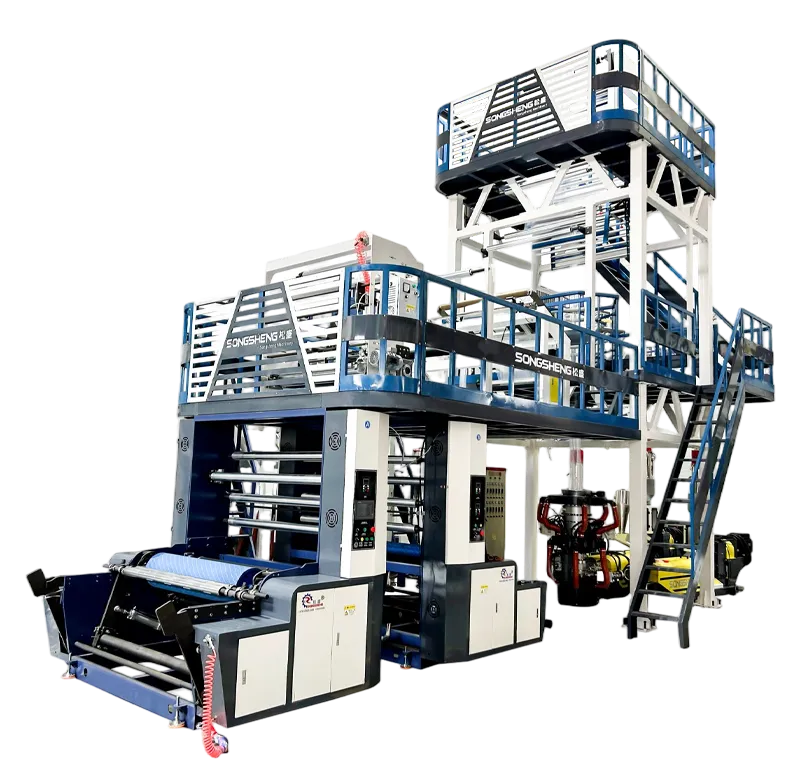
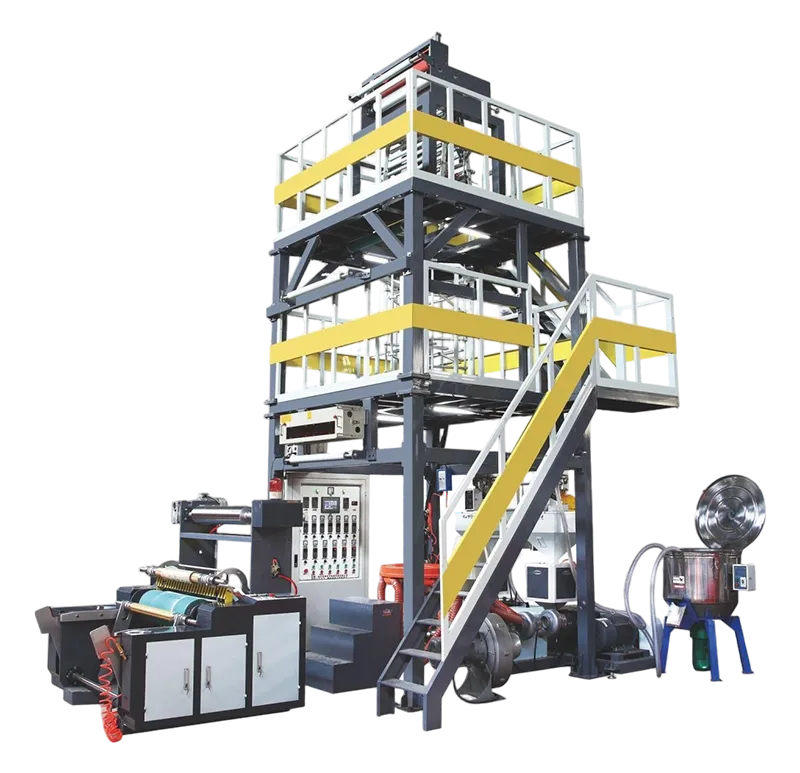
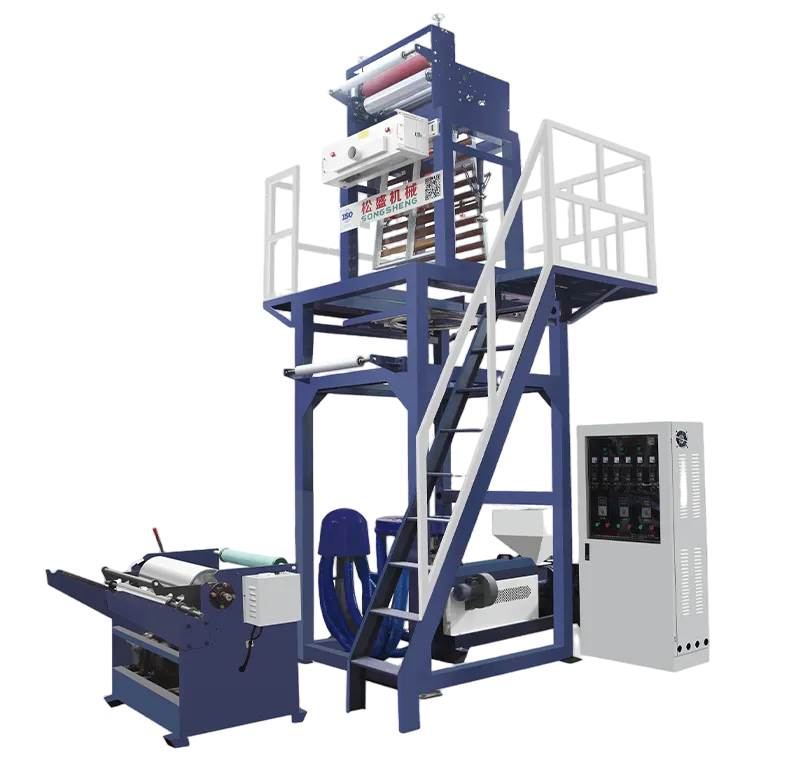
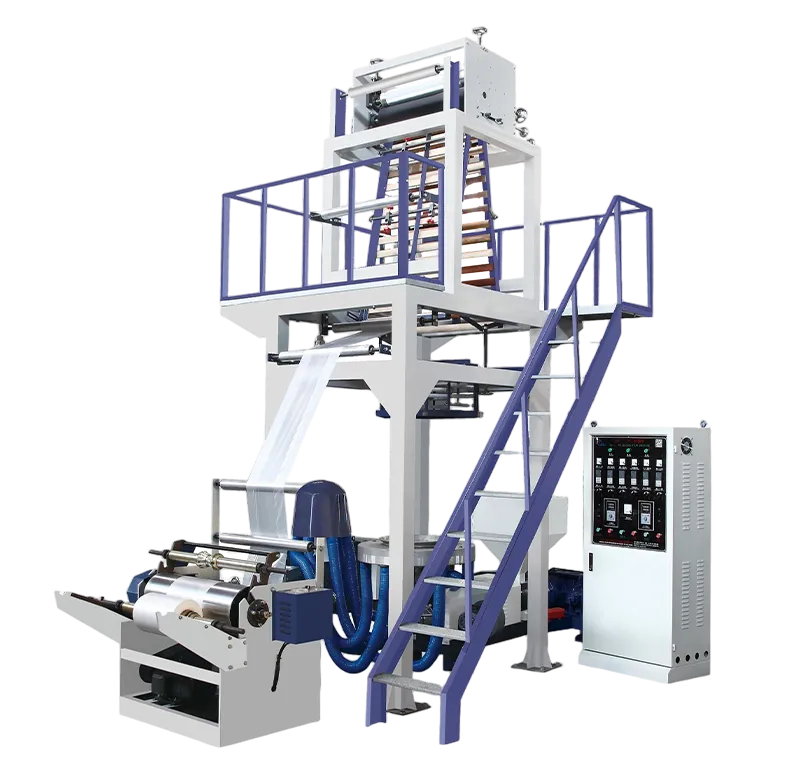
This is where the blown film machine becomes the limiting factor—or the competitive weapon. Upgrading to a system with low-residence-time die design, internal bubble cooling (IBC) with multi-zone thermal control, and an oscillating haul-off that randomizes gauge variation can mean the difference between a 5% scrap rate and a 15% one. In a typical 300 kg/h line running 24/5, that delta represents tens of thousands of euros in resin waste annually. When you’re searching for high-layer-count film production configurations with integrated IBC, look past the layer count spec and dig into the thermal uniformity and residence time distribution data—these numbers predict your real yields.
The sustainability angle adds another layer of complexity. Running recycled content in one of the structural layers is becoming a standard customer request, but PCR (post-consumer recyclate) brings melt-flow variability and potential contaminants that challenge traditional screen-pack and gear-pump setups. Forward-thinking processors are now specifying melt filtration and continuous screen changers as integral parts of their co-extrusion investment, not afterthoughts.
Where this is heading: Industry 4.0 meets film nanolayers
The next frontier isn’t just more layers—it’s smarter data integration. A modern blown film machine generates terabytes of process data from melt pressure transducers, thickness scanners, and cooling-air sensors. When that data flows into a centralized analytics platform, patterns become visible: the correlation between ambient humidity and EVOH barrier variance, the predictive maintenance trigger for a screw that’s slowly losing output, the batch-to-batch color shift that crept in undetected.
Several film producers are now connecting their co-extrusion lines to their ERP and MES systems, creating a live “digital twin” of each production run. This enables full material traceability—a requirement that’s quickly moving from pharmaceutical packaging into mainstream food contact applications. The ability to prove, with sensor data, that every meter of film meets the specified layer thickness tolerances is becoming a powerful differentiator in supplier audits.
For converters who haven’t yet mapped out their technology roadmap, the next three years will be critical. Customers aren’t going to stop asking for thinner films, better barriers, and recycled-content options—they’re going to demand all three simultaneously. And the only architecture that delivers that trifecta without trade-offs is a intelligently configured multi-layer co-extrusion line.
If you’re in the process of translating these trends into a capital project, it’s worth looking beyond the spec sheets and evaluating how different platforms handle real-world variability. Discover how Songsheng’s approach to multi-layer film equipment tackles production-grade challenges—from quick layer switching to consistent gauge control with recycled resins. The future of flexible packaging isn’t a single headline technology. It’s the quiet, methodical integration of layer design, process intelligence, and machine precision that lets you ship perfect rolls every time.
Disclaimer: This article references third-party market data and industry standards for informational purposes. Specific performance outcomes depend on resin selection, operating conditions, and equipment configuration. No machine specification guarantees a particular barrier performance or scrap rate without on-site validation under production conditions.