English
 Español
Every roll of film coming off the production line carries the invisible pressure of customer expectations. A single defect pattern can push scrap rates above 12%, disrupt converting operations, and erode hard-won trust. From flexible packaging to agricultural silage wraps, five surface and dimensional flaws recur across the industry, regardless of resin or application. The root causes are rarely mysterious—but fixing them sustainably requires a structured approach that goes beyond temporary parameter tweaks.
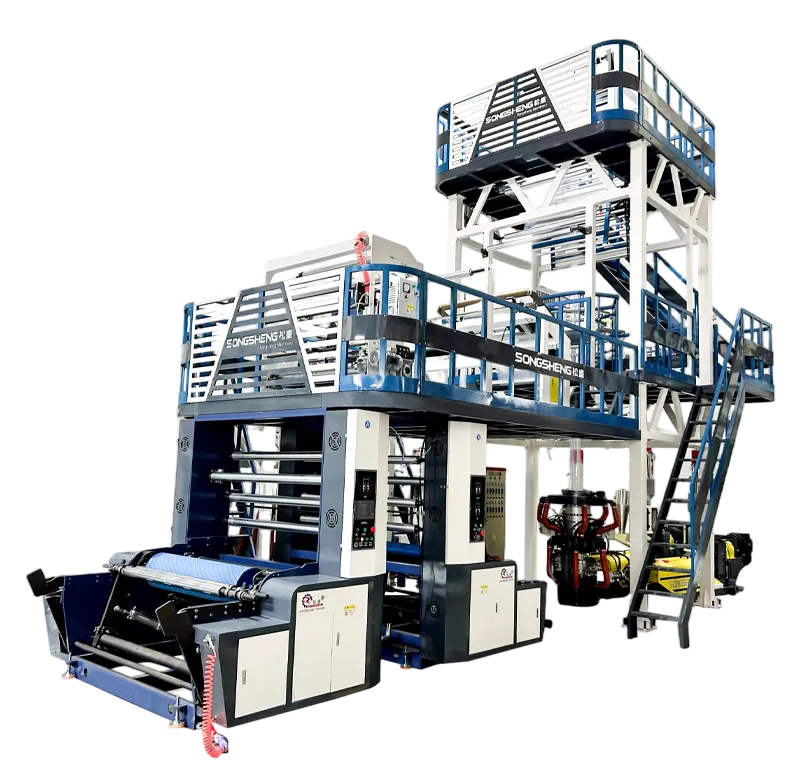
For a blown film machine to deliver consistent quality, understanding the interplay between material, temperature, and mechanical settings is essential. Before diving into the remedies, it is worth recognizing that persistent defects often signal a deeper limitation in process architecture. Many plants find that evaluating a high-precision extrusion system helps them escape the cycle of constant firefighting and scrap sorting.
1. Melt Fracture (Sharkskin)
Symptoms: A rough, matte surface texture characterized by regular, perpendicular ridges. It typically appears at the web edges and becomes visible to the naked eye on clear films.
Causes: The phenomenon occurs when the polymer exits the die at a shear stress exceeding its critical limit. Linear low-density polyethylene (LLDPE) is especially prone, particularly when processed through narrow die gaps at low melt temperatures. The viscoelastic nature of the melt causes surface tearing at the die lip.
Fixes:
-
Raise die and adapter temperatures by 5–10°C to reduce viscosity at the wall, but stay within resin degradation limits.
-
Introduce polymer processing additives (PPAs). Fluoropolymer-based masterbatches coat the die metal and postpone the critical shear rate, allowing higher throughput without sharkskin.
-
Widen the die gap. Even a 0.1 mm increase can significantly lower shear; many operators overlook this straightforward mechanical adjustment.
-
Assess die geometry. If sharkskin resists all thermal and formulation fixes, the flow channel design may be inducing excessive elongation. In such cases, exploring advanced die systems can address the root cause through optimized land length and transition angles.
2. Gauge Variation (Thickness Bands)
Symptoms: Alternating thick and thin zones spiraling along the web or appearing as machine-direction bands. This leads to winding deformation, poor print registration, and inconsistent mechanical properties. According to ISO 4593, precise thickness profiling is the first diagnostic step.
Causes: Die eccentricity, unbalanced air ring flow, melt pressure surging, or drifting extruder speeds. Even a 3% circumferential variation can render rolls unusable for high-speed automatic packaging lines.
Fixes:
-
Perform a hot die centering procedure weekly. Uneven adjustment bolt torque is a frequent, low-cost culprit.
-
Install a gear pump between the extruder and die to eliminate pressure fluctuations, a step that often reduces short-term gauge scatter by over 50%.
-
Balance the air ring. Clean all lips and adjust the ring so the airflow impinges the bubble at an identical height around its full circumference. Use a manometer or anemometer for repeatable settings.
-
Automate the correction. Automatic gauge control systems that map bubble thickness in real time and adjust die heat zones can maintain tolerance within ±2 µm, far tighter than manual intervention.
3. Bubble Instability (Fluttering or Sagging)
Symptoms: The bubble sways, breathes, or pumps, causing visible frost line oscillation. This instability feeds directly into gauge variation and can end in total bubble collapse.
Causes: Erratic ambient drafts, unbalanced cooling air, insufficient melt strength, or an unfavorable blow-up ratio (BUR). High-stalk configurations with tall frost lines are particularly sensitive to air turbulence.
Fixes:
-
Enclose the bubble. Retrofitting a stabilizing cage or heavy-gauge curtain shields the molten web from cross-drafts; even a regularly opened bay door can be the trigger.
-
Upgrade cooling capability. A dual-lip air ring combined with internal bubble cooling (IBC) widens the operating window substantially. If stability challenges recur, exploring internal bubble cooling solutions provides finer control over melt temperature and frost line position.
-
Adjust frost line height and BUR. For LDPE, a BUR between 2:1 and 3:1 with a moderate frost line height yields stable conditions. For HMW-HDPE, the “high-stalk” design demands tighter ambient control but produces superior mechanical properties.
-
Verify resin melt strength. Selecting a grade with a slightly higher molecular weight or adding a low-concentration LDPE blend to LLDPE can dampen oscillations.
4. Die Lines
Symptoms: Continuous, raised or grooved lines in the machine direction that scatter light, create print voids, and reduce clarity. Unlike sharkskin, these are localized and persistent.
Causes: Carbonized polymer residue or foreign particles lodged on the die lip land; microscopic nicks or scratches from improper cleaning tools; insufficient filtration.
Fixes:
-
Adopt a disciplined purging cycle. Use a high-viscosity purging compound with scrubbing action to dislodge degraded material before it carbonizes.
-
Polish die lips with diamond compounds and always use brass or copper tools during cleaning. A single scratch from a steel scraper can permanently compromise surface quality.
-
Enhance melt filtration. A fine-mesh screen pack or a continuous slide-plate screen changer captures contaminants upstream, preventing die lip buildup.
-
Document all maintenance events. Photograph die lips under magnification before and after each cleaning to build a knowledge base for early intervention.
5. Film Wrinkles and Blocking
Symptoms: Edge or body wrinkles that wind into the roll, causing gauge distortion and converting stoppages. Blocking appears as layers sticking together, making unwinding difficult.
Causes: Misaligned collapsing frame, unbalanced web tension, excessive winding tightness, insufficient cooling, or incorrect additive levels. These issues can test even the most robust blown film machine, especially when speed settings exceed the cooling capacity.
Fixes:
-
Align the collapsing frame and nip rolls using laser or precision spirit-level tools. A misalignment of 1 mm at the frame can induce a 5 mm wrinkle at the winder.
-
Employ closed-loop tension control with a tapered winding profile to reduce edge tightness. Modern drives adjust torque continuously based on roll diameter.
-
Ensure the web is fully cooled before winding—film temperature at the contact drum should be below 35°C. Additional water-cooled or chill rolls may be necessary for high-output lines.
-
Verify antiblock and slip agent concentrations. Testing the coefficient of friction per ASTM D1894 helps set the right additive ratio; seasonal temperature changes often warrant a formulation adjustment.
From Reactive Fixes to Preventive Performance
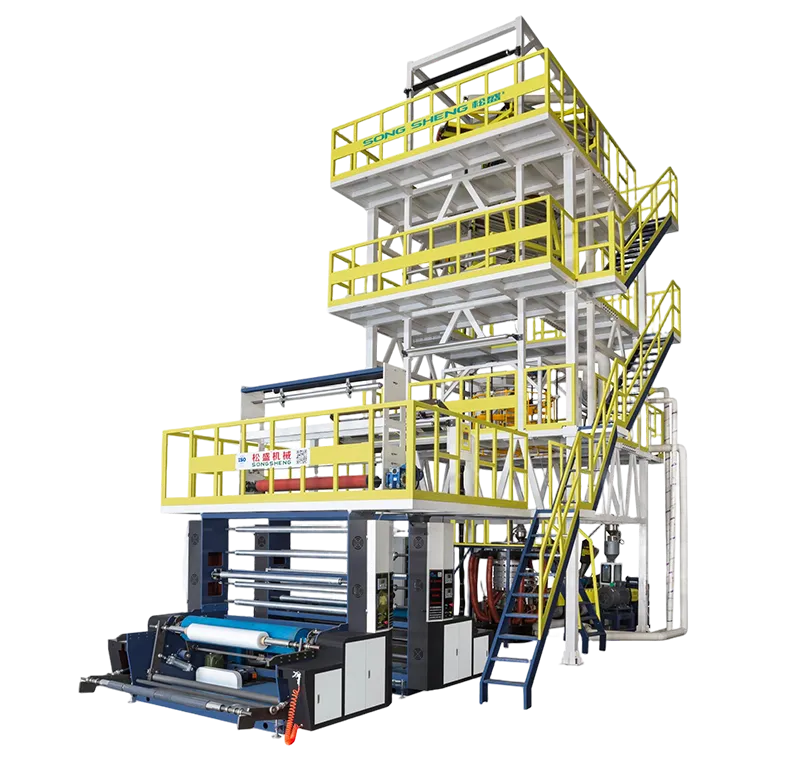
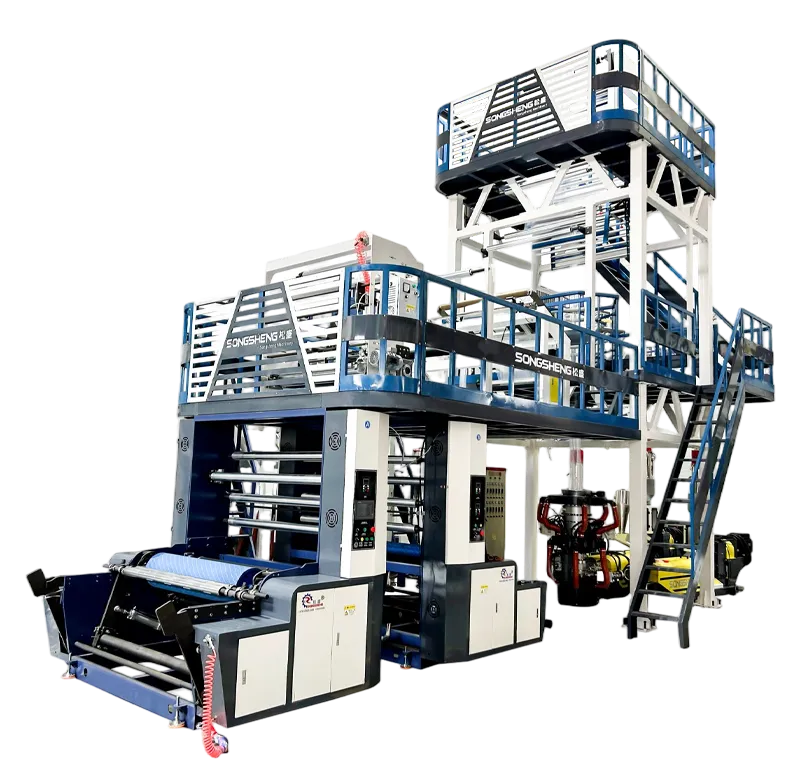
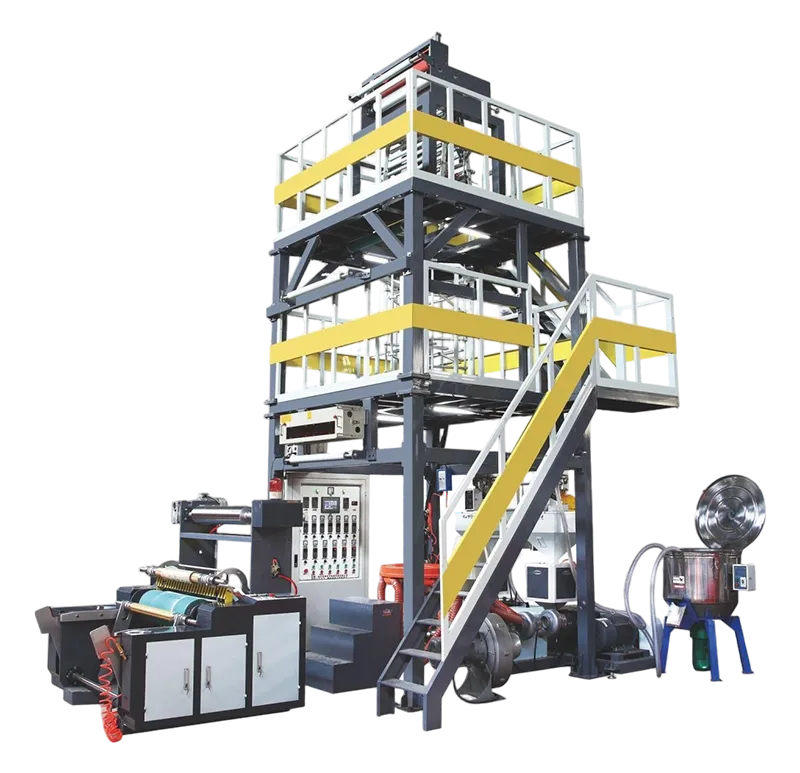
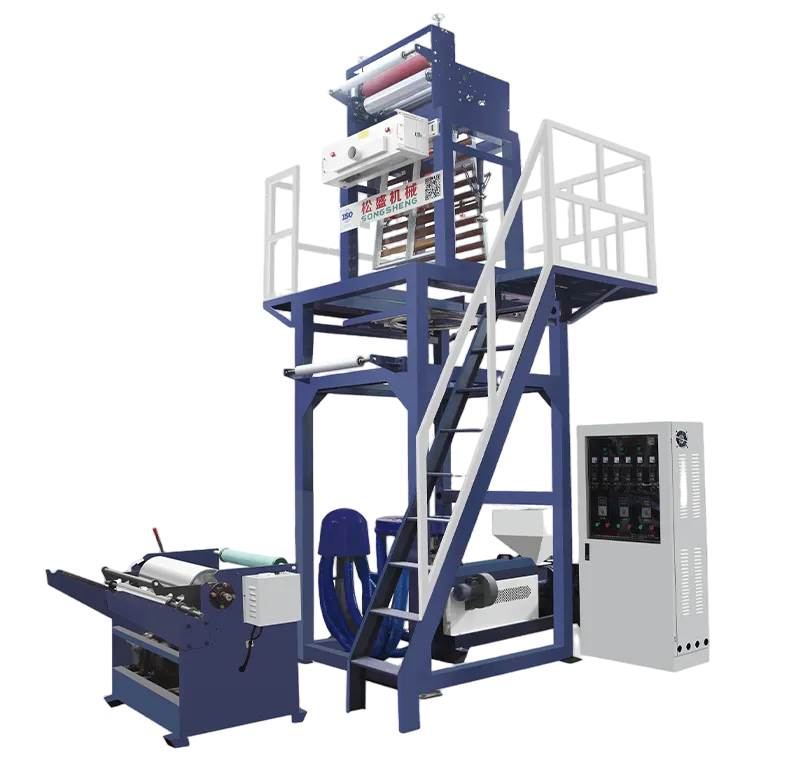
Most of the solutions above are tactical. To move beyond chronic defect chasing, evaluate whether the core control architecture of your line supports repeatable quality. Platforms that integrate gravimetric feeding, gear pumps, automatic die centering, and IBC under a single interface dramatically reduce operator-induced drift. When assessing a long-term upgrade path, Songsheng’s film production systems incorporate these principles to help processors meet tight specifications with measurably lower scrap rates.
A disciplined preventive maintenance schedule is equally critical. Implement quarterly air ring tear-downs, semi-annual die disassembly and polishing, and annual gearbox oil analysis. Tracking every parameter shift—from extruder amps to frost line height—creates a data trail that can pinpoint deviations before they become defects.
While recipe optimization solves many immediate problems, sustainable consistency ultimately depends on the precision and control repeatability of the equipment. By addressing root causes with both procedural discipline and well-matched hardware, film producers can turn a defect-prone process into a competitive advantage.
Disclaimer: This article provides general technical insights for educational purposes and does not replace on-site professional diagnosis. Always follow the machine manufacturer’s safety and maintenance guidelines.