English
 Español
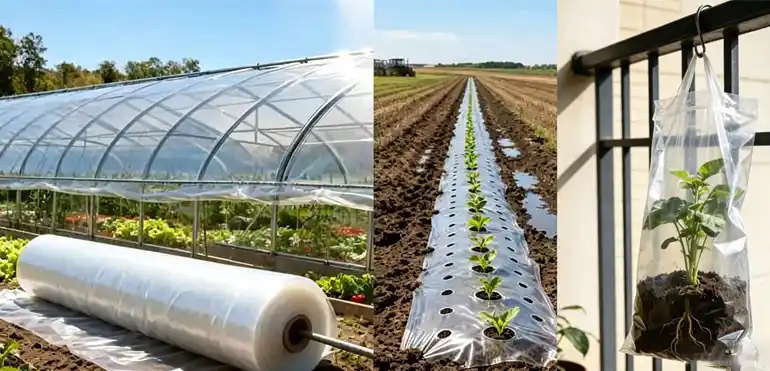
Every farming season brings the same silent crisis: a roll of mulch film that tears when stretched, or a greenhouse covering that yellows after just three months of sunlight. The farmer loses the crop. The manufacturer loses the contract.
Unlike standard packaging film, agricultural film lives in a war zone—UV radiation, temperature swings, mechanical tension, and chemical exposure from fertilizers. Producing film that survives these conditions requires an extruder built for precision and durability, not just speed.
So what actually separates a production line that delivers consistent, long-lasting agricultural output from one that churns out high reject rates?
The Additive Challenge: Why Standard Screws Fall Short
Most production managers understand that agricultural film requires additives—UV stabilizers (like HALS), anti-drip agents, and IR retention particles. What many overlook is how these additives change the melt behavior of the polymer.
The Technical Reality:
Additives increase the coefficient of friction inside the extruder barrel. A standard general-purpose screw—typically with a 2.5:1 to 3:1 compression ratio—will generate excessive shear heat. This degrades the UV stabilizers before the film even exits the die head. The result? A greenhouse film that claims "5-year UV protection" but fails in 18 months.
According to extrusion engineering standards (based on polymer processing guidelines), agricultural film production requires a barrier screw with a lower compression ratio (approximately 2.2:1 to 2.5:1) and a longer mixing section. This gentler processing preserves additive integrity while maintaining output.
For a closer look at how screw geometry is adapted for additive-rich resins, you can review the engineering specifications for detailed design diagrams.
Die Head Design: Flatness vs. Uniformity
When inspecting a production line, most buyers measure die head diameter. That is the wrong metric. The critical factor is the spiral mandrel distribution system.
In mulch film (typically 0.008mm to 0.03mm thickness), even a 5% variation in gauge creates weak spots. When the film is stretched over a row of seedlings, those spots tear.
What to look for:
-
A die head with at least 8 spiral mandrel ports (for widths above 1500mm)
-
Chrome-plated internal surfaces to prevent additive sticking
-
Adjustable die gap (1.5mm to 3.5mm range for agricultural grades)
Cooling Ring Stability: The Overlooked Variable
Here is a reality that troubles many production managers: you can have the perfect screw and die, but if your cooling ring lacks stability, the bubble will oscillate. Oscillation creates thickness variations that become visible as "bands" in the final greenhouse cover.
Industry Benchmark:
Dual-lip air rings with independent flow control for inner and outer bubbles have become the baseline for quality production. In a review of Asian extrusion facilities (2023 operational data), lines equipped with dual-lip IBC reported 22% fewer gauge variation complaints compared to single-lip designs.
Winding Tension: Why Mulch Film Rolls Collapse
A frequent complaint from farming cooperatives: "The roll looks fine on the outside, but the inner layers are wrinkled." This points directly to improper winding tension control during the process.
Agricultural film requires a surface winder with taper tension control. Here is why:
Standard center winders maintain constant torque. As the roll diameter grows, the outer layers experience exponentially higher compression. For soft agricultural grades (especially low-EVA content mulch film), this compression deforms the inner layers permanently.
The Solution:
A surface-driven winder with automatic tension reduction as the roll builds up. The target? Start tension around 25-30 N/m, tapering down to 10-12 N/m at full roll diameter.
For operators who want to see how these winding parameters translate into daily control settings, you can access the setup guide library for reference tables and calibration steps.
Common Operational Mistakes (And How to Avoid Them)
Even with the right equipment, improper operation kills film quality. Based on field reports from packaging engineers, here are the three most frequent errors:
| Operational Error | Consequence | Corrective Action |
|---|---|---|
| Running the melt temperature too high (>210°C for LLDPE) | Additive degradation, film brittleness | Keep melt below 205°C; monitor via thermocouple |
| Ignoring frost line height | Poor optical properties, reduced tear strength | Maintain frost line at 4x to 6x die diameter |
| Abrupt cooling air changes | Gauge bands, bubble instability | Adjust air volume in ≤5% increments |
A quick validation test: Take a freshly produced film sample. Fold it and rub the surface vigorously for 10 seconds. If you see white stress marks, your frost line is too low. Adjust your cooling air upward and retest.
Thermal Mass: Why Agricultural Dies Need Thicker Bodies
Here is an engineering detail that rarely appears in sales brochures: agricultural dies need thicker bodies than packaging dies.
The reason? Thermal mass. Agricultural film runs at lower melt temperatures (to protect additives) but requires tight temperature uniformity across the die face. A die body with insufficient thermal mass will develop cold spots near bolt holes or heater gaps. Those cold spots become lines of high viscosity—and those lines become tear paths in the finished greenhouse cover.
Reputable manufacturers use die bodies with minimum 30mm wall thickness in the spiral mandrel section, often with cast aluminum heater bands rather than mica heaters for better heat distribution.
Making a Sourcing Decision: What to Ask Suppliers
Before signing any purchase agreement, request these three verifiable data points:
-
Production log data from a recent agricultural film run (mulch or greenhouse grade) showing gauge variation across 1000m of output.
-
Screw material certification confirming bimetallic barrel lining (at least 1.5mm thickness of Ni-Cr-B alloy).
-
Winding roll hardness test results (measured with a Shore durometer) from inner, middle, and outer layers of a full roll.
A supplier who cannot provide these documents is likely selling general-purpose equipment marketed specifically for agricultural use.
Conclusion
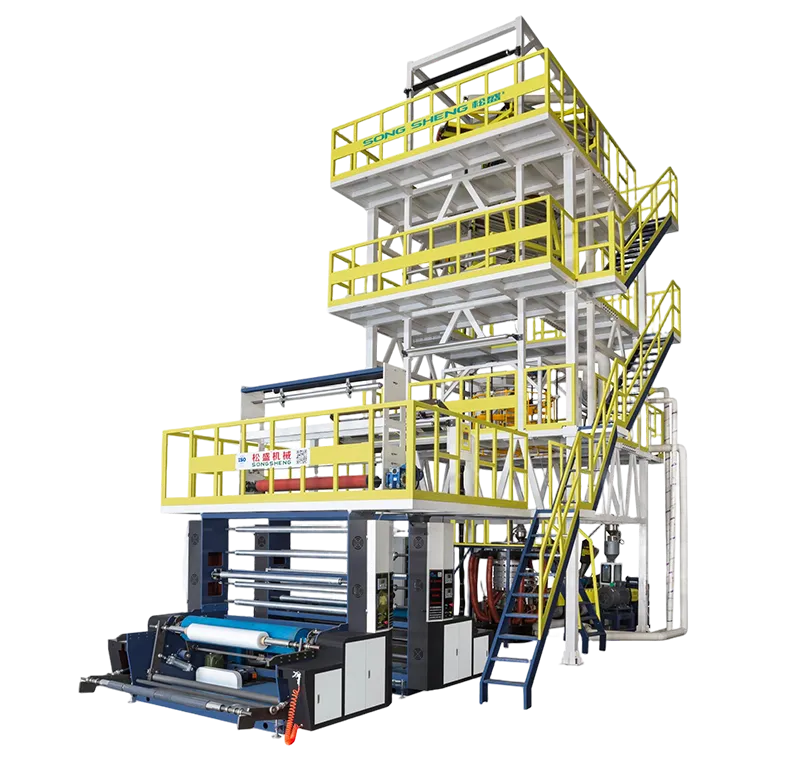
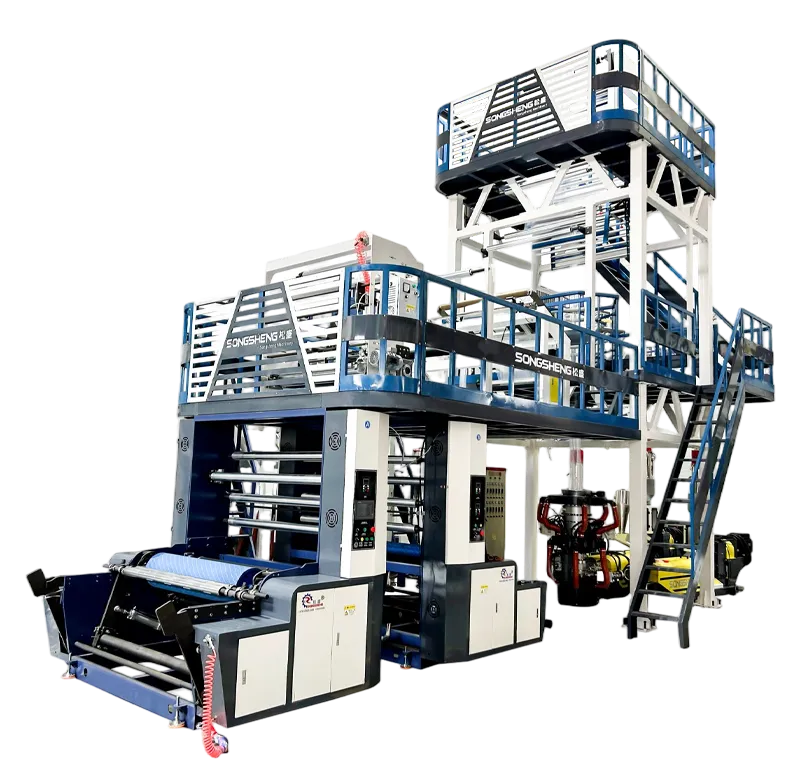
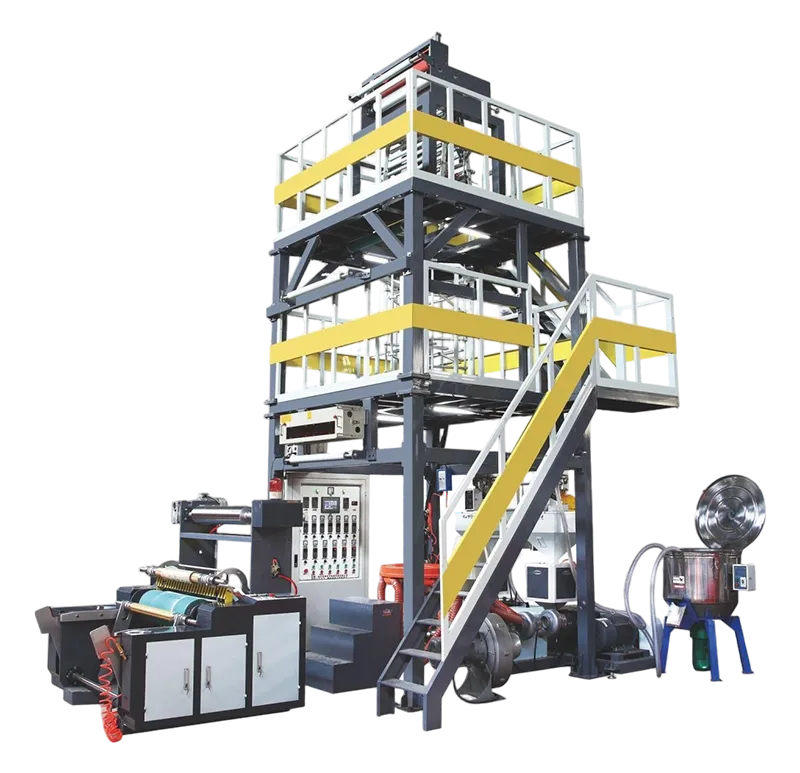
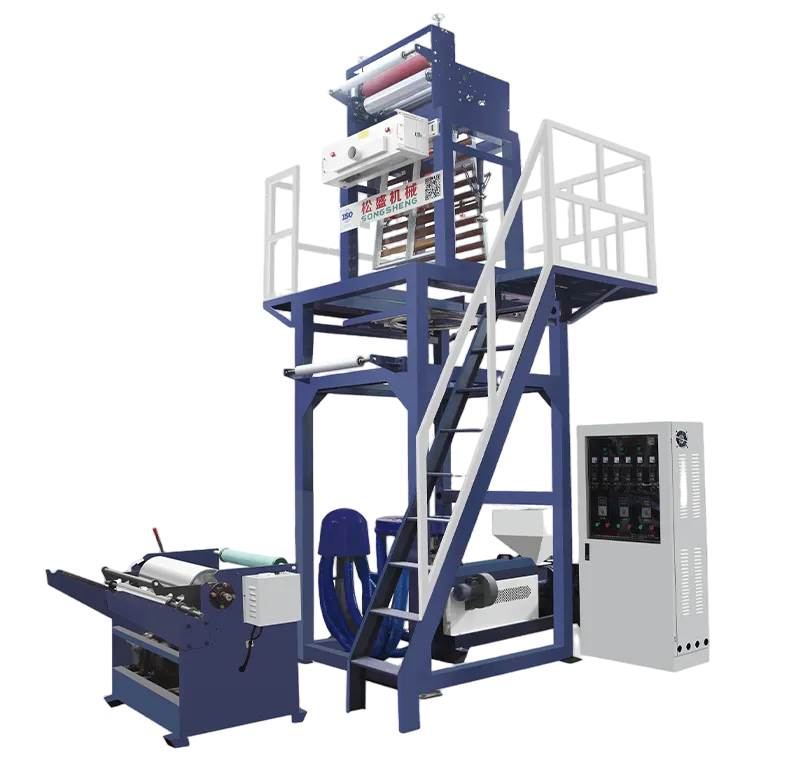
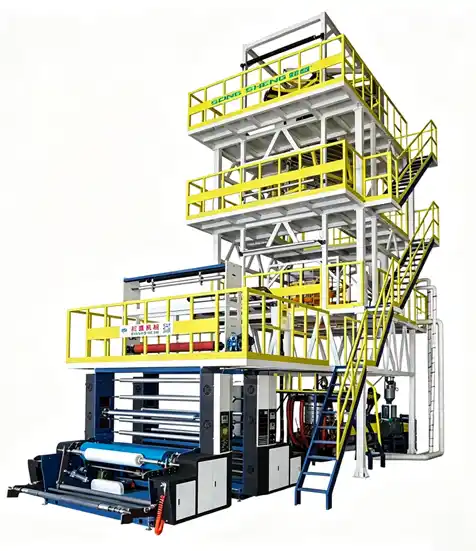
Producing reliable film for farming applications—whether for mulching vegetables or covering commercial greenhouses—demands an extruder line engineered for low-shear additive handling, stable bubble cooling, and precision winding tension. The screw, die head, air ring, and winder must work as an integrated system, not a collection of generic components.
Your Next Step
If you are currently running a general-purpose line and facing high reject rates on agricultural orders—or if you are setting up a dedicated production cell—hardware specifications make the difference between profit and scrap.
For production managers seeking equipment that respects the unique demands of UV-treated and additive-rich resins, review the technical documentation for detailed specifications and available die size options from SongSheng.
What is your current biggest challenge—maintaining UV additive stability, or controlling film gauge variation across wide widths? Contact the engineering team for a benchmark comparison of your existing line's performance.