English
 Español
Every packaging workshop manager knows the sinking feeling: You are running a batch of standard T-shirt bags, and suddenly the film thickness fluctuates. The gusset is misaligned. You waste rolls of resin, not to mention the downtime resetting the line.
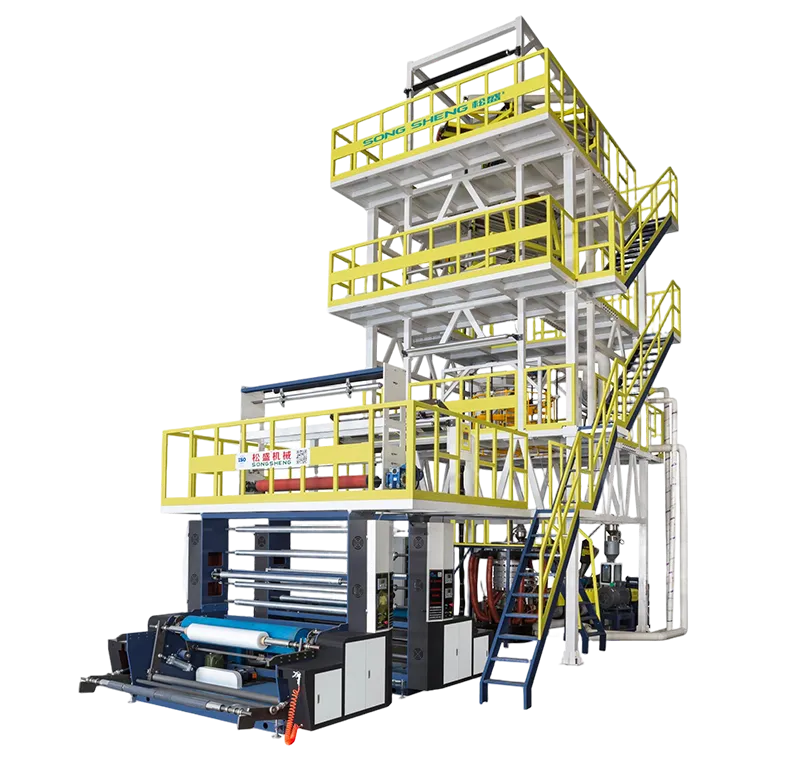
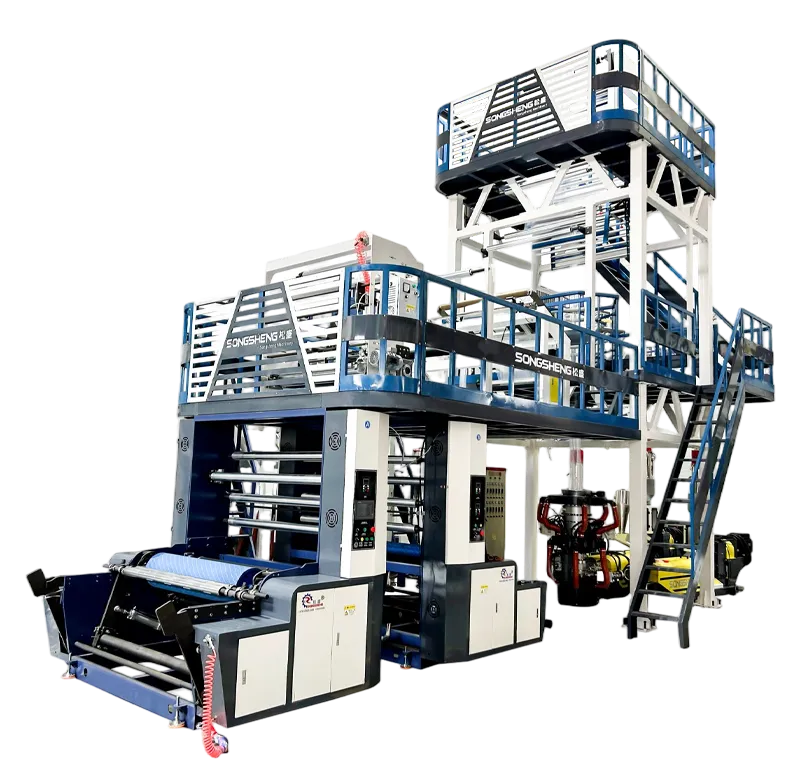
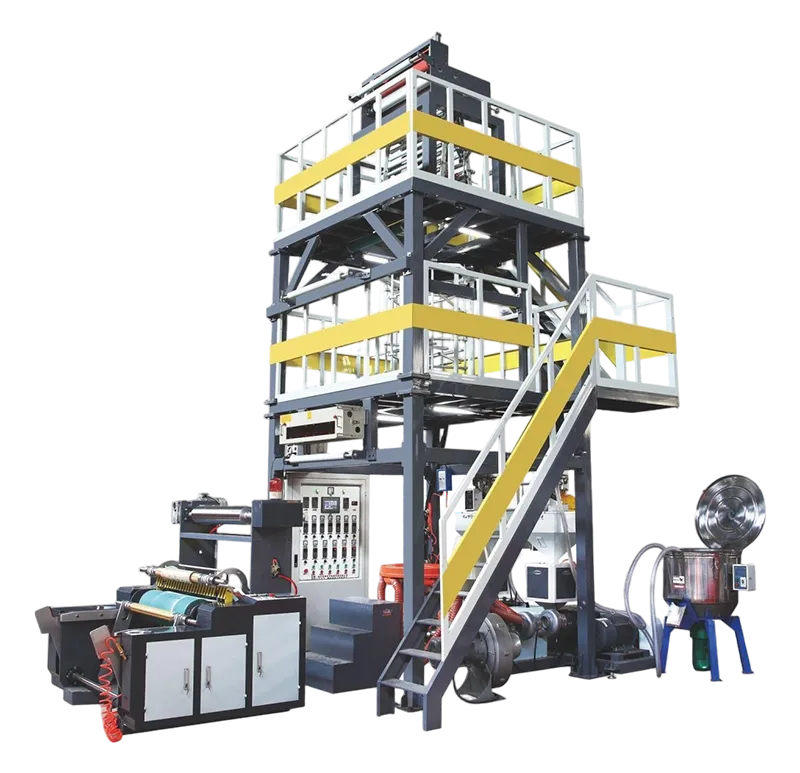
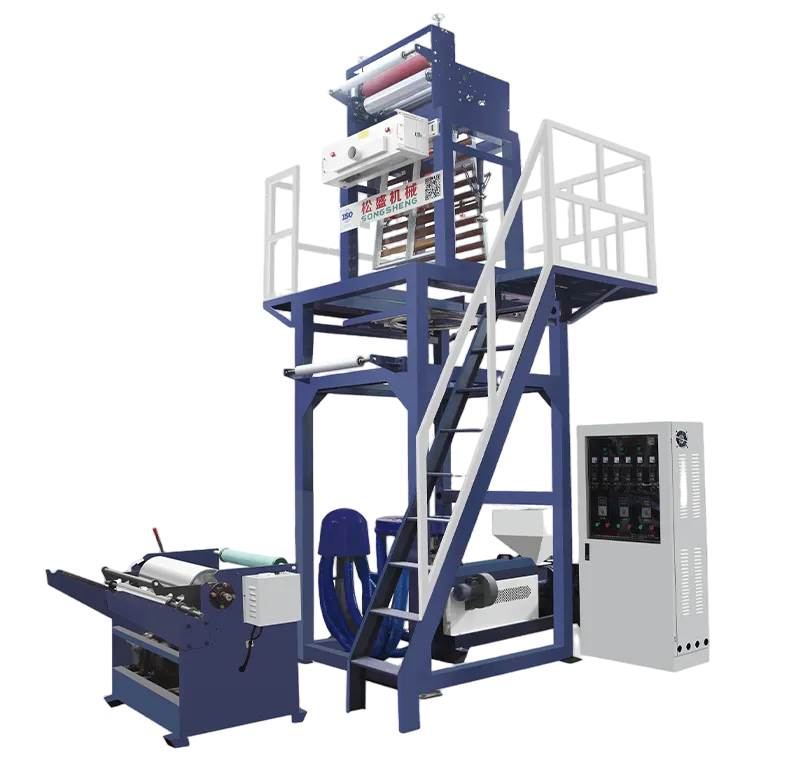
For businesses focused on producing quality shopping bags, the extruder is the heart of the operation. But with so many technical specs on the market, how do you choose a line that guarantees consistent output without overpaying for features you do not need?
This guide breaks down the mechanics of high-performance film extrusion, focusing on real-world production pain points rather than just horsepower.
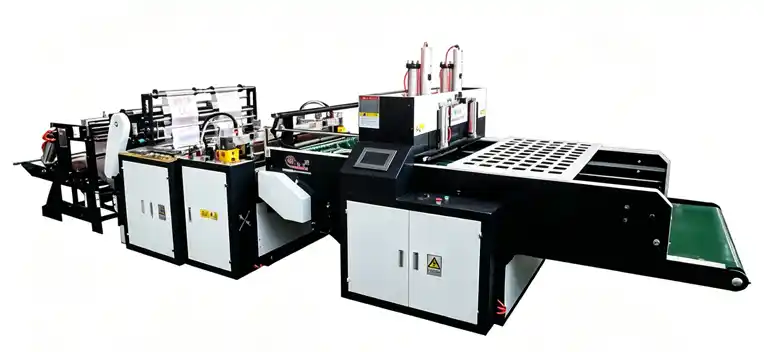
The Hidden Costs of an Unstable Bubble
Most buyers look at output weight (kg/h) first. That is a mistake. The real cost driver is consistency.
In shopping bag making, the film must have a uniform gauge (thickness) across the entire width. If the die head temperature varies by just 2-3 degrees Celsius, you will get thin spots. These thin spots become the bottom seal of a carry bag. When a customer loads it with groceries, that bag fails. That is your brand failing.
The Mechanical Root Cause:
Unstable air flow in the cooling ring or a poorly machined screw compression ratio causes melt fracture. According to industry extrusion standards (based on common screw design principles), a barrier screw with a precise 2.2:1 to 2.5:1 compression ratio is essential for LLDPE and HDPE blends used in shopping bags.
If you want to dig deeper into the specific screw configurations for different bag grades, you can view detailed specifications on our technical specs page.
3 Critical Components to Evaluate
When sourcing equipment, do not just look at the brand name. Inspect these three physical components:
1. The Extruder Barrel Temperature Control
Shopping bag resin (especially recycled content) is sensitive. You need PID intelligent control with minimal deviation. Look for a machine that offers 4-6 heating zones on the barrel alone. Without this, you cannot handle the variance between virgin pellets and regrind material.
2. The Die Head (IBC System)
Internal Bubble Cooling (IBC) is no longer a luxury; it is a necessity for high-speed shopping bag lines. IBC increases output by up to 30% because it cools the film from the inside. More importantly, it maintains gauge tolerance within ±5%. Without IBC, you are running blind.
3. The Winding Unit (Surface vs. Center Wind)
Here is where many engineers argue. For shopping bags, you need a surface winder with gap control. Why? Because bags require a specific "blocker" effect to prevent them from sticking together inside the pack. A center winder pulls tension too tightly, flattening the embossing.
Common Operational Blind Spots
Even with a perfect line, operators make errors. One common mistake is ignoring the "frost line height." If the frost line is too high, the molecular orientation is poor, making the bag tear easily. If it is too low, the film becomes hazy and brittle.
The Fix:
Run a test every 4 hours. Take a sample of the film, stretch it, and look for "necking in" (the width shrinking). This tells you instantly if your air volume is matched to your haul-off speed.
Why Precision Trumps Speed
A high-speed machine that produces 20% waste is slower than a medium-speed machine with 2% waste. Let’s look at the math.
| Parameter | Standard Machine (Market Average) | Precision-Optimized Machine |
|---|---|---|
| Output Speed | 100 kg/h | 90 kg/h |
| Gauge Variation | ±8% | ±3% |
| Waste Factor (Startup/Scrap) | 8-10% | 2-3% |
| Effective Usable Output | 90 kg/h | 87.3 kg/h |
The "slower" machine is essentially matching the output without the resin loss. For a 24/7 operation, that 5% waste reduction pays for the machine within 12 months.
The "Shopping Bag" Specific Die Design
Most blown film machines are generalists. They try to do agricultural film, shrink film, and shopping bags. This is a compromise.
Shopping bags require a specific oscillating haul-off to distribute the thickness variations evenly. Without the oscillation, your "heavy duty" bag might actually have a weak line running down the side.
Furthermore, the auxiliary equipment matters. An automatic turret winder allows for continuous roll changes. If you are stopping the extruder to change rolls by hand, you are creating "gel" particles (degraded polymer) that get pushed back into the melt. These gels become pinholes in the shopping bag.
A reliable setup integrates these components smoothly. You can explore application cases to see how other shopping bag manufacturers solved similar gel issues.
Making Your Final Decision
You do not need the most expensive German line. But you do need a machine that respects the physics of the polymer you are running.
When you visit a supplier or check a spec sheet, ask these three questions:
-
What is the actual service life of the screw? (Hard-facing thickness matters).
-
Is the air ring adjustable on the fly without tools?
-
Can I see a current production log of shopping bag film at 50-micron thickness?
If the supplier hesitates on question three, walk away.
Conclusion
Choosing a blown film line for shopping bags is about controlling the variables: temperature, tension, and tolerance. By focusing on IBC, a barrier screw, and a surface winder, you ensure that every kilogram of resin becomes a saleable bag, not a scrap pile.
Your Next Step
If you are looking to upgrade your current line or are setting up a new bag-making shop, hardware quality is only half the story. Matching the extruder to your specific resin blend is the other half.
For operators looking to minimize downtime and maximize film quality, explore this brand's solutions offers a detailed selection guide. You can see how their specific extrusion parameters align with shopping bag standards.
Do you currently struggle more with gauge variation (thickness) or winding telescoping? Let me know in the comments below or contact our engineering team to benchmark your current specs.